
How to Make Rowan Jelly: Foraging, Prep, and Beginner Recipe
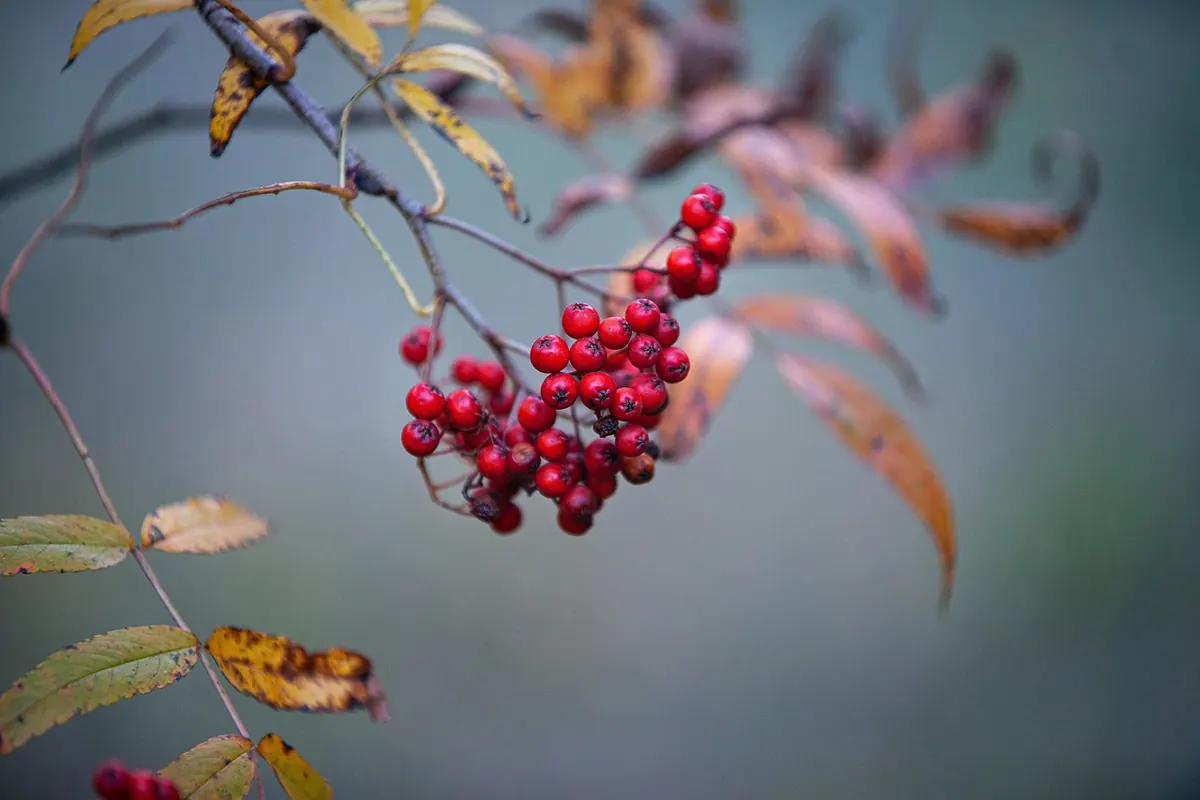
Rowan jelly sits somewhere between a countryside tradition and a very good idea. The berries are bitter, dry and unpromising raw, which is exactly why almost nobody eats them straight from the tree and almost everybody who cooks them ends up making jelly. A picking session in early autumn, an hour of gentle simmering and a night of dripping through a cloth gives you jars of sharp, amber jelly that cuts through lamb, game, cold ham and hard cheese. Here is how to find the right berries, gather them without harming the tree, and get a clean set on your first attempt.
Start With the Tree, Not the Berries
Rowan (Sorbus aucuparia), often called mountain ash, is not an ash at all. Learn the whole tree before you learn the fruit, because several red-berried plants in the same hedgerow are not food.
- Leaves: pinnate, with five to eight pairs of leaflets and one leaflet at the tip. Each leaflet is sharply serrated, dark green above and paler underneath.
- Bark: smooth grey with small horizontal lenticels when young, cracking and roughening with age.
- Flowers: flat clusters of creamy white blossom in May and June, with a heavy, slightly sour scent.
- Berries: dense hanging clusters of fifteen to forty small fruits, each about the size of a pea, orange to scarlet, with a tiny five-pointed star dimple at the base. That dimple is the detail worth checking.
Watch out for the lookalikes. Yew has red, cup-shaped arils around a black seed on needle-leaved branches, and its seed and foliage are toxic. Guelder rose carries translucent red berries in drooping clusters on a shrub with three-lobed, maple-like leaves. Honeysuckle berries grow in pairs rather than heavy hanging bunches. If you are not certain, walk on. A pocket field guide or an experienced forager is worth more than any amount of guessing.
When Rowan Berries Are Ready
Depending on where you live and how high the tree sits, rowan berries colour from late August through October. Pick when the whole cluster is fully orange-red with no green flush, and the berries give slightly under a fingernail without being shrivelled. Choose a dry morning after the dew has lifted; wet berries keep badly and mush in the bag.
Older pickers will tell you to wait for the first frost, which folk wisdom says sweetens the fruit.
You do not need to wait. Frost softens the flavour, but cooking removes the bitterness anyway, and freezing the berries overnight at home does much the same job. Check a few trees before committing: some crop heavily, others barely fruit at all, and the difference is usually variety and shelter rather than anything you did.
Foraging Without Doing Damage
- Ask first. Private land, farm hedges and many parks need the owner's permission. If you are unsure who owns a tree, ask before you pick.
- Avoid busy roadsides, sprayed verges and railway land. Exhaust residue and herbicide are not worth the jar.
- Leave plenty behind. Waxwings, redwings and fieldfares depend on rowan through the winter. On a heavy-cropping tree, take no more than a third.
- Cut, don't strip. Snip whole clusters with a short stem of twig. Pulling individual berries shakes the tree and wastes fruit you will not use.
- Mind the bark. Rowan bark is thin and damages easily, so keep feet off low branches and never break limbs to reach a cluster.
Take a basket or a cloth bag rather than a plastic one, which traps moisture and turns a good haul into a pulpy mess. Wear old clothes, too; rowan juice stains.
Preparing the Berries
Rinse the clusters in cold water and pick out leaves, insects and any fruit that is brown or mouldy. Stripping the berries from the stems is the tedious part: a kilo takes about twenty minutes with your fingers or the tines of a fork. You do not need to be fussy, because everything is strained later. If you are not cooking straight away, freeze the stripped berries in a bag. They will keep for a year and release their juice more readily when thawed.
A Beginner's Rowan Jelly
You will need: 1 kg stripped rowan berries, 500 g tart apples roughly chopped (skin, core and all), water to barely cover, sugar at about 450 g per 600 ml of strained juice, and the juice of half a lemon per 600 ml. A jelly bag or a double layer of muslin, a large heavy pan, and four or five sterilised jars.
- Put the berries and apples in the pan and add water just to cover. Simmer, lid on, for 30 to 40 minutes until everything is soft and pulpy, stirring now and then.
- Tip the pulp into a sterilised jelly bag set over a bowl and leave it to drip overnight. Do not squeeze the bag, or fine pulp will pass through and cloud the jelly. Expect roughly a litre of juice.
- Measure the juice. For every 600 ml, weigh out 450 g of sugar. Warm the juice gently with the lemon juice, then add the sugar and stir until every grain has dissolved.
- Bring to a rolling boil and hold it there for 8 to 12 minutes, then test.
- To test, spoon a little jelly onto a chilled saucer, let it cool for a minute and push it with your finger. If it wrinkles, it is ready. If it slides about, boil three more minutes and test again.
- Skim off the froth, pour into hot sterilised jars, seal and leave to cool before labelling. This quantity makes four to five jars.
Getting the Set Right
Rowan is high in acid but only moderate in pectin, which is why the apple is there. Do not skip it, and do not be tempted into enormous batches; a kilo or so of fruit at a time sets far more reliably than five. Judge the set with the saucer, not the clock, since humidity and pan width both change boiling times. If the jelly stays loose, boil it harder. If it turns rubbery, you have gone too far, though it will still melt nicely into a pan sauce.
One safety note before you start: rowan berries should always be cooked, as eating them raw can upset your stomach, and the seeds should not be eaten in quantity. If you are pregnant, breastfeeding or managing a health condition, check with a doctor or pharmacist before trying unfamiliar foraged foods. If in any doubt about a tree, leave it alone.
Storing, Sealing and Using It
Cool your jars completely, then label them with the date. Stored somewhere cool and dark, the jelly keeps its colour and firmness for about a year. Once a jar is open, keep it in the fridge and use it within a few weeks. Rowan jelly is at its best with roast lamb, venison, duck or cold pork, and it holds its own against sharp cheddar and blue cheese. A spoonful stirred into a hot pan after deglazing lifts a gravy in seconds, and the same trick works with a simple roast vegetable tray. Make it once and you will find yourself watching the hedgerows every September, waiting for the clusters to turn.
Photo: chulmin1700 / Pixabay