
Rowan vs Mountain Ash: Are They the Same Tree?
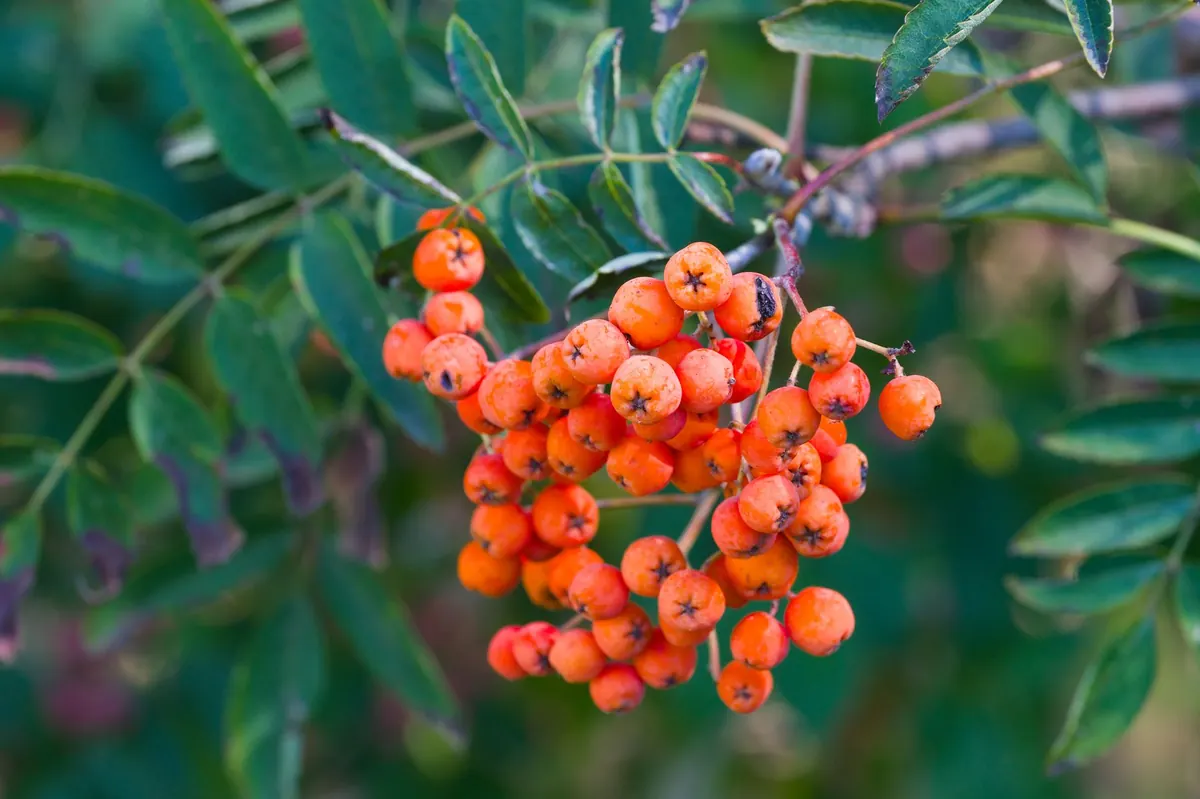
Ask ten people in Britain what a rowan is and most will describe a small tree with creamy spring blossom and clusters of scarlet berries. Ask them what a mountain ash is and they will describe exactly the same tree. They are right on both counts, and that is where the trouble starts.
The confusion is not really about the tree. It is about a name that travelled badly. Rowan, mountain ash, Sorbus aucuparia, quickbeam, witchwood, roan — all of these point to the same species. What they do not tell you is that the true ashes are a completely different genus, and that a handful of unrelated trees around the world also carry the mountain ash label. Get the names straight and the tree itself becomes much easier to read.
One tree, many names
The rowan is Sorbus aucuparia, a member of the rose family. It grows across most of Europe and into Asia, and in Britain it turns up everywhere from lowland hedges to windswept Highland glens. In the wild it is often a slender, short-lived tree of maybe 10 to 15 metres, though garden forms stay smaller and bushier.
The name "mountain ash" comes from two observations. Rowan grows well at altitude, hence "mountain". Its leaves are pinnate — a row of paired leaflets along a central stem — which looks superficially like the leaves of a common ash. Add greyish, smooth bark and you have a tree that a casual glance can mistake for ash. That resemblance is skin deep, and it has caused centuries of muddled naming.
Regional names add to the fog. In parts of Scotland and northern England you will hear "rowan" almost exclusively. In Wales, criafol. In Ireland, caorthann. Older sources use "quickbeam" or "wicken tree", especially in England, where the tree was planted near doorways for protection. All of them describe the same plant.
The real difference: rowan versus true ash
Common ash (Fraxinus excelsior) belongs to the olive family. It is a large forest tree, often reaching 30 metres or more, with stout grey-brown branches and distinctive black buds set opposite each other on the twig. Rowan buds are purple-black and fuzzy, and they sit alternately along the stem.
The leaves are the quickest giveaway once you know what to look for.
- Rowan leaflets: paired along a central stalk, each leaflet with a finely serrated edge, and a single terminal leaflet at the tip. Leaves feel soft and slightly grey-green beneath.
- Ash leaves: also pinnate, but the leaflets are larger, coarser, without such fine teeth, and the arrangement sits opposite other leaves on the branch.
- Rowan fruit: tight bunches of small scarlet berries, each with a tiny five-pointed star at the base. Ash produces winged seeds, called keys, hanging in loose brown clusters.
- Rowan flowers: flat, creamy-white clusters in May and June, smelling faintly sweet. Ash flowers are small, dark and wind-pollinated, easy to miss entirely.
- Rowan bark: smooth and silver-grey when young, becoming lightly fissured with age. Ash bark develops deep, regular ridges.
Put the two side by side in autumn and there is no argument. One tree is hung with red berries, the other with dry brown keys. Until you see that, use the buds and the leaf arrangement.
Where the name causes real problems
In North America, "mountain ash" means something else entirely. The name is applied to species in the genus Sorbus that grow on that continent — American mountain ash (Sorbus americana), showy mountain ash (Sorbus decora) and Sitka mountain ash (Sorbus sitchensis). Botanically these are relatives of the rowan, not ashes, and several are so close in appearance that some botanists treat them as part of the same wider group.
Then there is the Australian mountain ash, which is a eucalypt. And the mountain ash of the American South, which is a completely different tree again. If you are ordering plants, reading a forestry guide or identifying a tree from a foreign field guide, check the scientific name. It is the only label that does not move.
A quick naming rule
If the tree has pinnate leaves, red berries and a scientific name beginning with Sorbus, it is a rowan in the broad sense, whatever local name it carries. If it has pinnate leaves, winged seeds and a name beginning with Fraxinus, it is a true ash. Everything else labelled mountain ash is a regional habit, not a botanical link.
Growing rowan: practical notes
If you are planting one, the two trees want different things, which is another sign they should not be lumped together.
- Choose a rowan for small gardens. It stays compact, tolerates wind and poor soil, and fruits young. A container-grown tree planted in autumn or early spring settles in fast.
- Give it sun or light shade. Berries ripen best in an open position, but the tree copes with exposed sites and coastal wind.
- Do not plant it where you want bare, tidy ground. Berries drop in autumn, and the seeds germinate freely in nearby borders and gravel.
- Skip the pruning unless needed. Remove dead or crossing branches in late winter. Rowan bleeds little and recovers well, but heavy cutting reduces the berry crop.
- Watch the foliage in dry summers. Fireblight and canker can affect Sorbus, especially in stressed trees. Good air movement and steady watering help more than any spray.
True ash, by contrast, is a large tree for large spaces, and its future in Britain is uncertain because of ash dieback. Anyone planting ash now should look into resistant stock and local advice before committing, and check current guidance on moving ash plants between areas.
Why the berries matter
Rowan berries are a wildlife crop first. Thrushes, redwings and waxwings strip the trees in autumn, sometimes within days of the fruit turning red. Fieldfares arrive later and pick over what is left. Gardeners who want birds in winter often get more from a single rowan than from any feeder.
People have long made rowan jelly and wine, and the berries are edible once cooked — raw they are unpleasantly astringent and the seeds contain compounds best avoided in quantity. If you plan to eat them, use the fruit only after cooking, avoid the seeds, and take the usual care with any plant you have not eaten before. The berries are high in acid, so they are usually paired with apple. And if you are taking any medication or pregnant, speak to a pharmacist or doctor before adding foraged fruit to your diet. Rowan is not a self-diagnosis or self-treatment tree.
One more caution: only harvest from trees you have identified confidently, well away from busy roads and sprayed hedges. If the tree has winged seed clusters rather than berries, you have an ash, not a rowan, and the seeds are not a substitute.
So, are they the same tree?
Rowan and mountain ash are the same tree in Britain and Ireland, and the names can be used interchangeably for Sorbus aucuparia. What they are not is a true ash. That belongs to a separate genus, grows far larger, carries winged seeds instead of berries and diverges from rowan at the most basic family level.
Learn the buds, the leaf arrangement and the fruit, and you will never be caught out. Use the scientific name when it matters — buying, planting, writing a label or identifying a tree abroad. Then enjoy the rowan for what it is: a modest, generous tree that suits small plots, feeds the winter birds and earns its folk reputation without needing any of the myth.
Photo: Jean-Paul Wettstein / Pexels